
As well as access by train, Stagecoach bus 4 from the city stops outside St David’s Station, H bus also goes to this station.
Exwick is a small suburb located in the city of Exeter. It is situated on the western side of the River Exe and is known for its picturesque views of the river and surrounding countryside. Today the area is predominantly residential, with a mix of modern and traditional housing, but it has seen the rise and fall of various industries as well, from clothmaking, aircraft parts, baking to most recently making wooden flooring.
Exwick’s rich history dates back to the Roman occupation of Britain. The suburb was once home to a Roman fort, which was built to protect the nearby river crossing. In the Middle Ages, Exwick was a thriving agricultural community, with several farms and orchards located in the area. Today, the suburb retains much of its historic charm, with several listed buildings and landmarks, including St. Andrew’s Church and Exwick Mill.
From Exeter Memories (https://www.exetermemories.co.uk/em/_areas/exwickphotos.php):
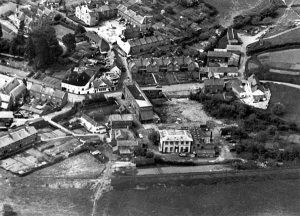 This photo from about 1960 of Exwick from the air, shows the centre of the village with many familiar buildings. The old post office and Lamb Inn (Village Inn) centre left and Exwick House centre , bottom third still exist. The large County Steam Laundry is hard to miss, and yet, if you drive past the spot now, it is impossible to imagine its existence. The leat flowing right to left can be traced and most of the houses on Exwick Hill still exist.
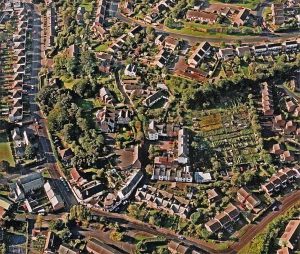 After 1960, Exeter grew, with new estates constructed on the hills to the west. This aerial photo from about 2001 shows part of the same area of the village as the previous photos. The County Steam Laundry has gone, and the edge of Kinnerton Way can be seen in the bottom left. However, certain buildings remain; the church, the old vicarage, the post office and cottages and the Hermitage on Exwick Hill can all be discerned.